

Vitalik Buterin pockets $70k fading “crazy” Polymarket bets, arguing rational pricing of extreme scenarios can still beat crypto’s most heated narratives.
Summary
- Vitalik Buterin says he targets Polymarket during “crazy mode,” fading unlikely scenarios like Trump winning a Nobel Peace Prize or the dollar going to zero by 2027.
- He committed roughly $440,000 to prediction markets and booked about $70,000 profit on a 2025 bet, around a 16% return, by “betting against market hype.”
- Web3 founder Loxley Fernandes argues such trades show rational players can profit while dragging prices back toward fair value when emotions distort markets.
Vitalik Buterin has quietly turned prediction markets into a lab for rationality under stress, cashing roughly $70,000 in profit by betting against what he calls Polymarket’s “crazy mode.”
Core story: betting against hysteria
In an interview with Foresight News, the Ethereum (ETH) co-founder explained that his strategy starts with identifying markets where traders are gripped by extreme scenarios and fear-driven fantasies. One example he highlighted was a Polymarket contract speculating on whether US President Donald Trump would receive the Nobel Peace Prize, a wager he implicitly framed as emblematic of “crazy mode.” Another strand of speculative anxiety he cited was the idea that the dollar could “hit zero in 2027,” a scenario he treated as a textbook case of overblown macro panic rather than serious forecasting.
Buterin said he had committed around $440,000 to Polymarket and, on a 2025 bet, walked away with about $70,000 in gains, a roughly 16% return. “Betting against market hype” is where the edge lies, he argued, suggesting that traders who fade the most hysterical narratives can systematically extract value from prediction markets.
Why prediction markets matter
Web3 entrepreneur Loxley Fernandes, CEO of Dastan, argued that Buterin’s win underscores why prediction markets exist in the first place. In his words, “When emotional extremes and irrational feelings affect markets, rational players not only make money but also help bring prices back to reality,” adding that “this is exactly what prediction markets are meant to do: provide clear signals amid all the noise.”
Buterin has also used prior examples to highlight the fragility of oracle design, noting that some users in another bet reportedly saw returns above 33,000% on roughly $1.3 million in volume — a concentration of risk he said oracle designers “never anticipated.”
Market context and source links
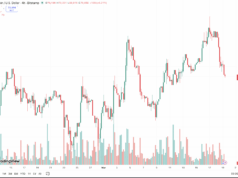
As this debate over “crazy mode” plays out, bitcoin trades near $76,937, down about 2.27% over 24 hours. Ethereum changes hands around $2,269, also softer over the past day. Those moves set the backdrop for Buterin’s thesis: in a market still prone to manic swings, cool-headed pricing of tail risks can be one of the few persistent edges.
Primary external sources referenced in the original article include Cryptopolitan’s coverage of January prediction-market volumes, its report on a Nobel committee inquiry tied to Polymarket, and Buterin’s comments and examples on prediction market design and returns.