
OTC trading, also known as over-the-counter trading, is built for traders and investors handling large transactions that require stable price execution and minimal market impact. Unlike standard crypto trading, it focuses on private deals, fixed quotes, and access to deep liquidity.
Platforms like Binance, Coinbase, Kraken, Crypto.com, OKX, Bybit, and Nexo offer different strengths, from execution speed to asset-backed investing, making it easier for financial institutions and individual investors to choose the best OTC platforms based on specific trading needs and risk preferences.
In this guide, we will explore key features, trading fees, supported cryptos, and how each platform handles liquidity and overall performance across leading OTC platforms. Including how OTC trading operates across different OTC platforms and how assets are traded.
Top OTC Trading Platforms at a Glance
Here are the top picks for an OTC trading platform
| Platforms | Best For | Taker/Maker Fees | Available Cryptocurrencies | Our Rating |
| Binance OTC | Best for liquidity and large trades | 0.10/0.10% | 500+ | 9.5/10 |
| Coinbase Prime OTC | Best for US Institutions | 0.05% / 0.00% | 300+ | 9.0/10 |
| Kraken OTC | Transparent pricing and cost control | 0.26/0.16% | 200+ | 9.0/10 |
| Crypto.com OTC | Integrated platform with ecosystem access | 0.04/0% | 300+ | 8.9/10 |
| Bybit OTC | High volume transactions and derivatives strategies | 0/0% | 500+ | 9.1/10 |
| OKX OTC | Institutional block trade execution and pre-market access | 0.10/0.08% | 400+ | 9.2/10 |
| Nexo OTC | Asset-backed investing and personalized brokerage | 0.07/0.04% | 80+ | 8.8/10 |
7 Best Over-the-counter (OTC) Trading Platforms Reviewed
1. Binance OTC: Best for Liquidity & Large Trades
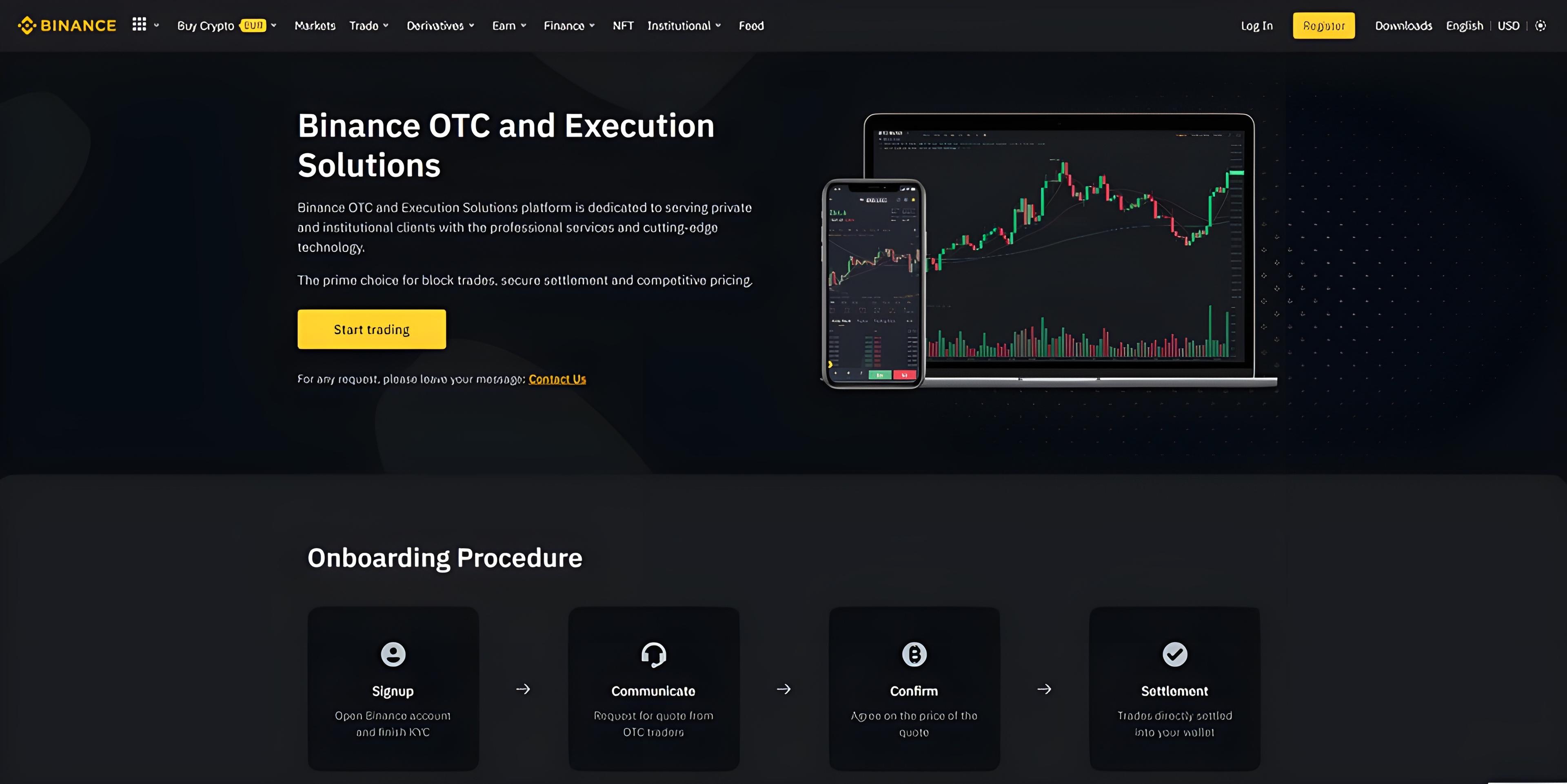
Binance OTC enables direct desk execution for large trades with minimal impact on the public market. Operating within the Binance exchange, it allows traders to execute trades through a Request for Quote (RFQ) system.
Its main advantage is deep liquidity, sourced across internal networks and connected OTC platforms, which supports high-value transactions for individual investors and financial institutions with fixed price quotes.
It also provides robust trading services for financial institutions and high-net-worth individuals handling over-the-counter trading. Binance OTC typically avoids standard trading fees, relying on spreads, making it an attractive option for high-volume investing. All activity runs within one trading platform, without needing an external broker or separate brokerage.
Core Features
- Internal matching engine across OTC platforms for controlled trades
- Consistent deep liquidity for high-volume large trades
- Quote-based pricing to lock in price before you execute trades
- Integrated with the Binance exchange and the core trading platform
- Optimized for large transactions with controlled risk

Pros and Cons
| Pros | Cons |
| Strong liquidity across connected exchanges | Large minimum size for OTC deals |
| Reduced slippage | Not suitable for small investors |
| Efficient handling of large trades | Access varies by region |
| Fully integrated within one platform |
2. Coinbase Prime: Best for US Institutions
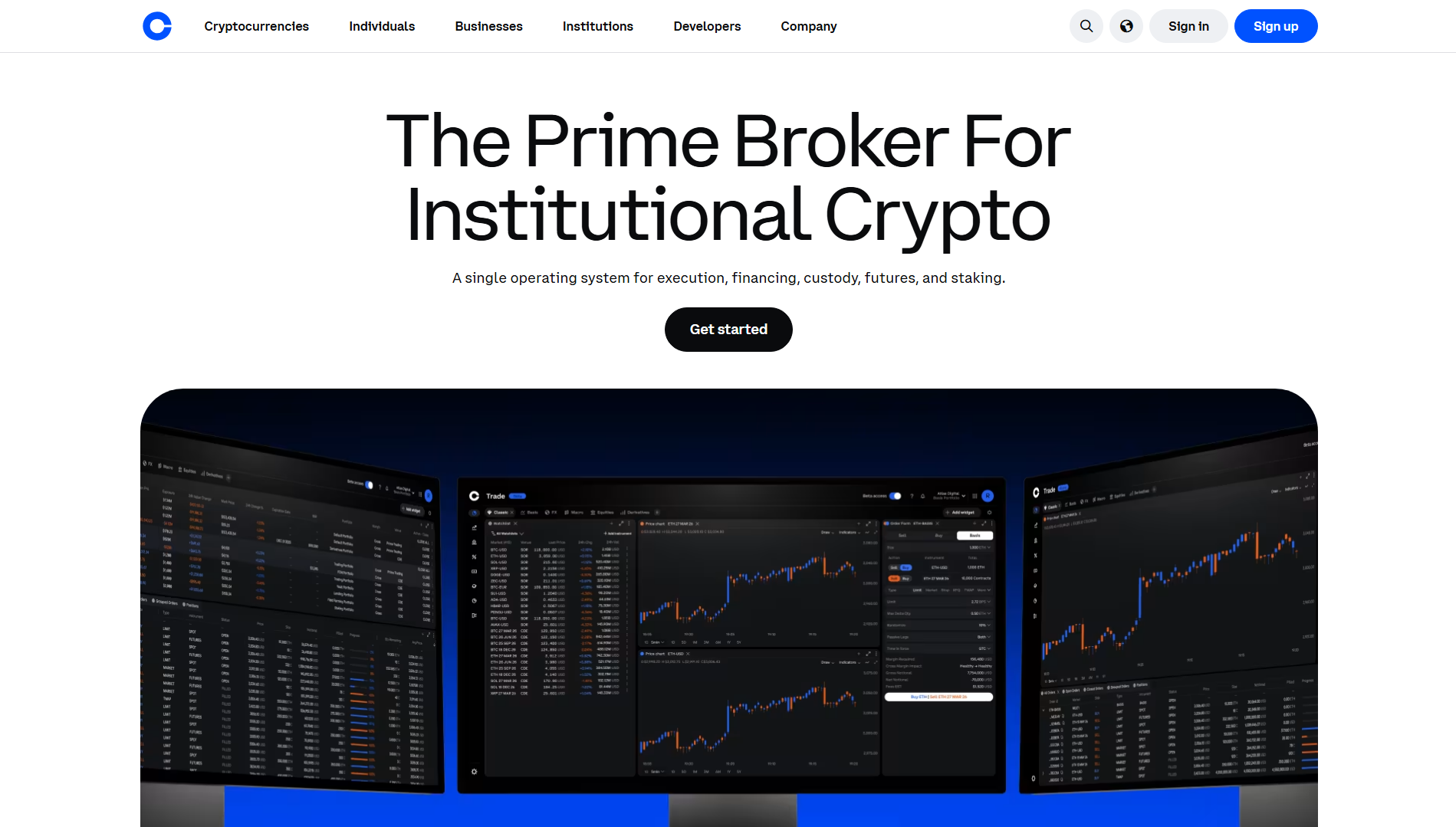
Coinbase Prime OTC operates as a full-service OTC trading platform within a regulated prime brokerage environment, built around the needs of US institutions. It combines execution, custody, and capital management inside a single platform, making it suitable for financial institutions and companies handling large-scale investments.
What defines Coinbase Prime OTC is its multi-venue routing system. It connects to multiple OTC exchanges, liquidity providers, and OTC exchanges, including the Coinbase crypto exchange, allowing financial institutions and traders to execute trades across fragmented market conditions while still getting competitive price quotes.
Core Features
- Unified brokerage combining custody, execution, and financing
- Built for US institutions, and vip clients
- Secure storage with cold storage and advanced security controls
- Integrated trading platform for managing assets within one account

Pros and Cons
| Pros | Cons |
| Strong infrastructure for US institutions | Limited availability outside supported regions |
| Access to Coinbase exchange and external exchanges | High minimum trade requirements |
| Integrated custody with cold storage | Interface can feel complex |
| Unified account for managing investments
Interface can feel complex |
May include extra fees depending on usage |
3. Kraken: Best for Transparent Pricing & Cost Control
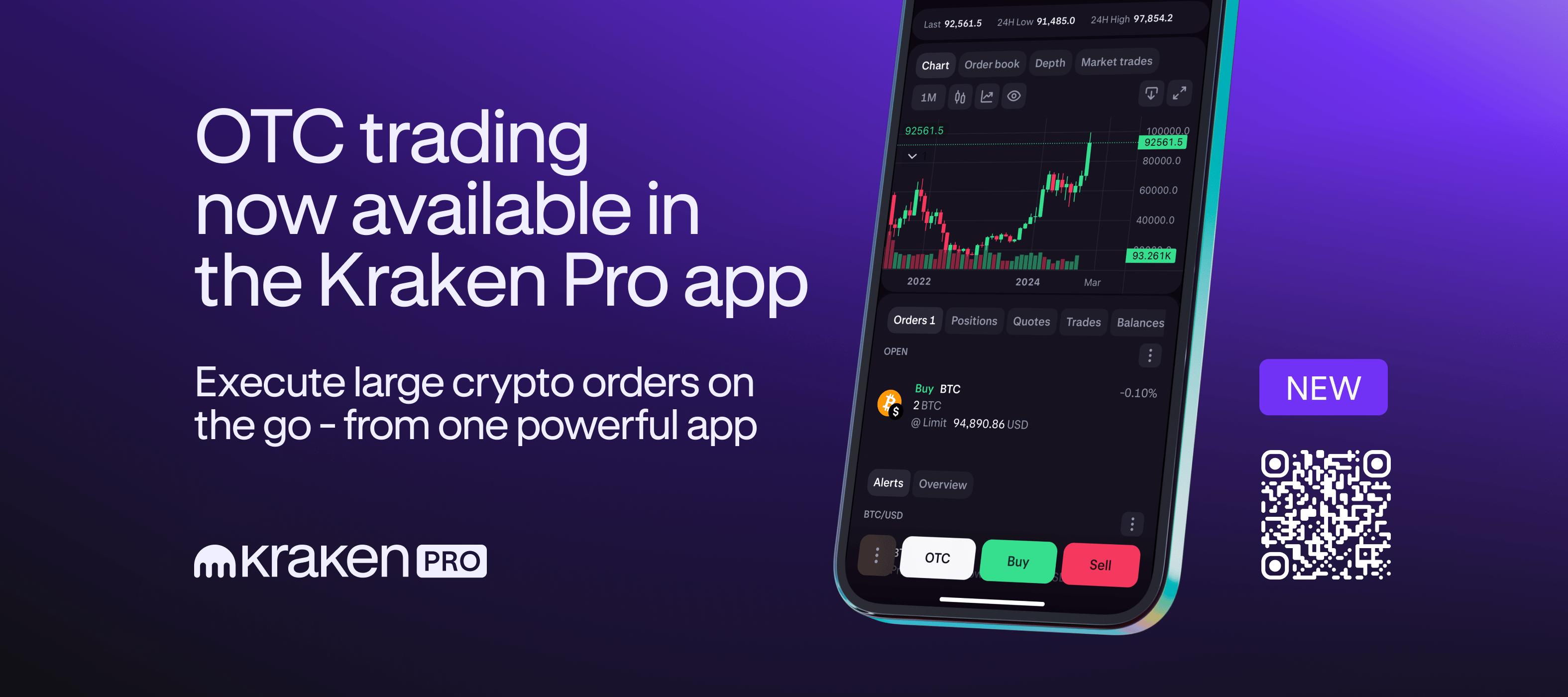
Kraken OTC is built around direct negotiation and personalized execution for high-value transactions. Traders interact with a dedicated desk to execute trades privately, reducing exposure to sudden market reactions. Kraken provides negotiated price quotes with tighter spreads, which helps traders avoid slippage when moving significant assets. This is an example of how private execution improves control in volatile conditions.
This gives traders more control over how transactions are carried out, especially when managing sensitive price levels. Once a trade is confirmed, settlement can be done using multiple options.
Core Features
- Negotiated price quotes with tighter spreads
- Access to liquidity across supported coins
- Supports fiat and stablecoin transactions
- Built for vip clients and professional traders
- Private execution outside standard crypto trading

Pros and Cons
| Pros | Cons |
| Personalized support for large transactions | Requires onboarding for access |
| Tighter spreads and better price control | Lower liquidity than the top OTC platforms |
| Strong privacy during execution | Fewer advanced derivative options |
| Transparent trading fees | High minimum trade requirements |
4. Crypto.com: Best for Integrated Ecosystem Access
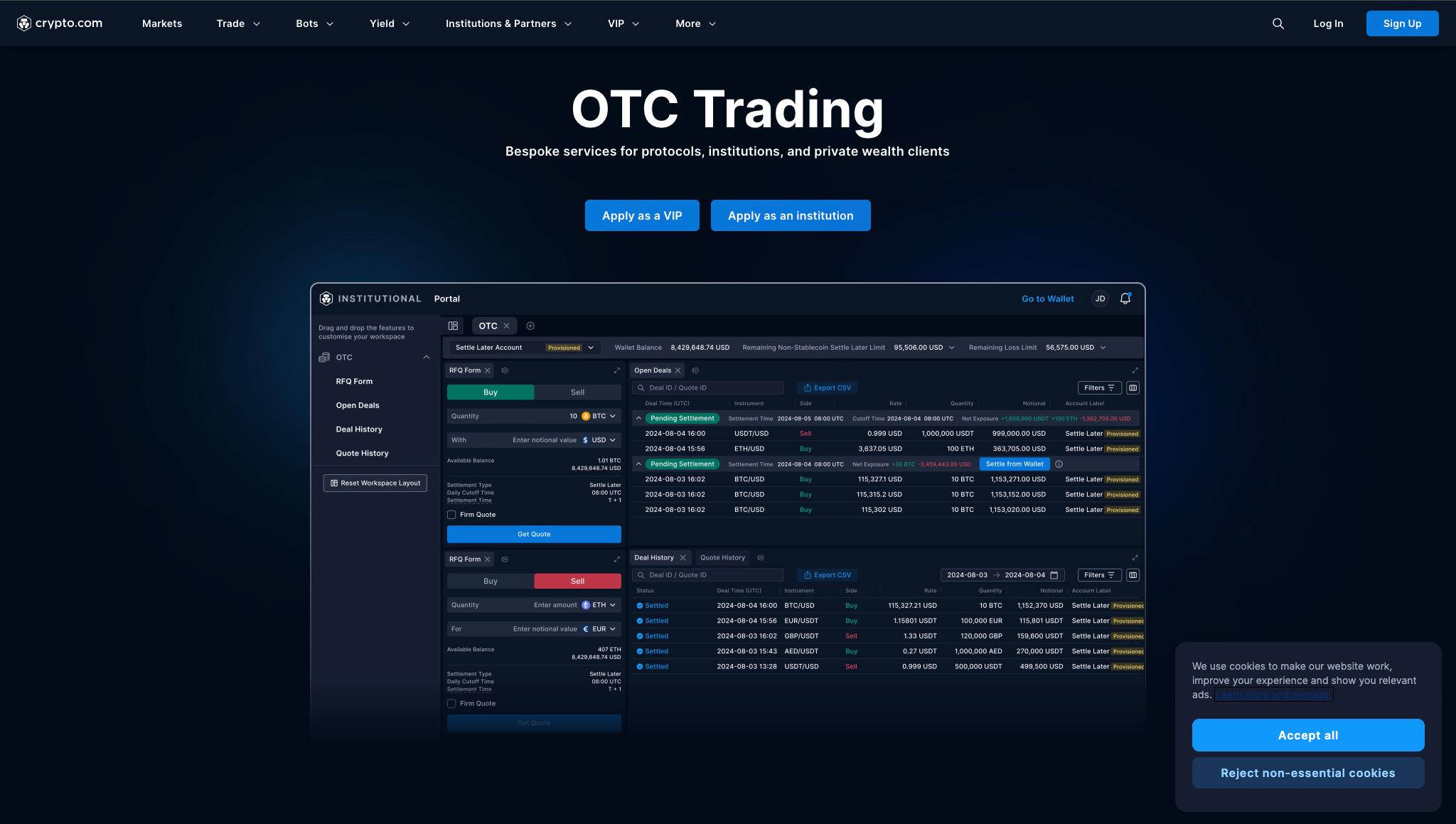
Crypto.com OTC connects execution with a broader ecosystem that includes payments, staking, and asset management. It allows OTC traders to execute trades privately while keeping funds within the Crypto.com exchange, reducing the need to move assets across multiple exchanges.
Instead of separating execution from usage, Crypto.com links transactions directly to other services like spending, yield generation, and large-scale portfolio management. Execution is handled through direct negotiation, giving traders control over price and timing. While liquidity may not match the largest OTC platforms, it is sufficient for most structured investing needs, especially for users already active within the ecosystem.
Core Features
- Private trading within the Crypto.com exchange
- Integrated platform connecting trading, payments, and staking
- Direct settlement within a single account
- Built for traders, investors, and vip clients
- Access to ecosystem tools for managing investments

Pros and Cons
| Pros | Cons |
| Strong ecosystem integration | Spread-based pricing may reduce profit clarity |
| Easy movement of assets within one platform | Fewer advanced derivative options |
| Simplifies investing by combining trading and asset usage, and is useful for managing multiple investments | May not suit all investors |
| Integrated with Crypto.com exchange for seamless transactions | Limited transparency |
5. Bybit OTC: Best for High Volume Transactions

Bybit OTC is built for handling high volume transactions with speed, price certainty, and multi-product execution. It allows traders to execute trades at a fixed price, avoiding slippage that occurs in standard crypto trading.
A key feature is its Request for Quote (RFQ) system, which supports multi-leg execution of trades across spot and derivatives. This makes it practical for advanced traders managing complex trading decisions within a single platform, a critical subject for advanced traders. Execution is private, helping reduce exposure to market manipulation across OTC platforms in volatile markets and keeping large transactions off public exchanges.
Core Features
- Request for Quote (RFQ) system for the precise execution of trade
- Supports multi-leg transactions across spot and derivatives
- Fixed price execution to reduce slippage
- Integrated with the Bybit exchange and core trading platform
- Access to key assets like BTC, ETH, and stablecoins
- Pre-market trading for select assets

Pros and Cons
| Pros | Cons |
| Fixed price reduces slippage in large transactions | Limited assets compared to full crypto exchange listings |
| Strong liquidity for core pairs | Not available in some regions |
| Supports advanced derivatives strategies | Requires higher-tier account access |
| Private execution improves security | Spread may affect overall profit |
6. OKX: Best for Institutional Block Trades & Pre-Market Access
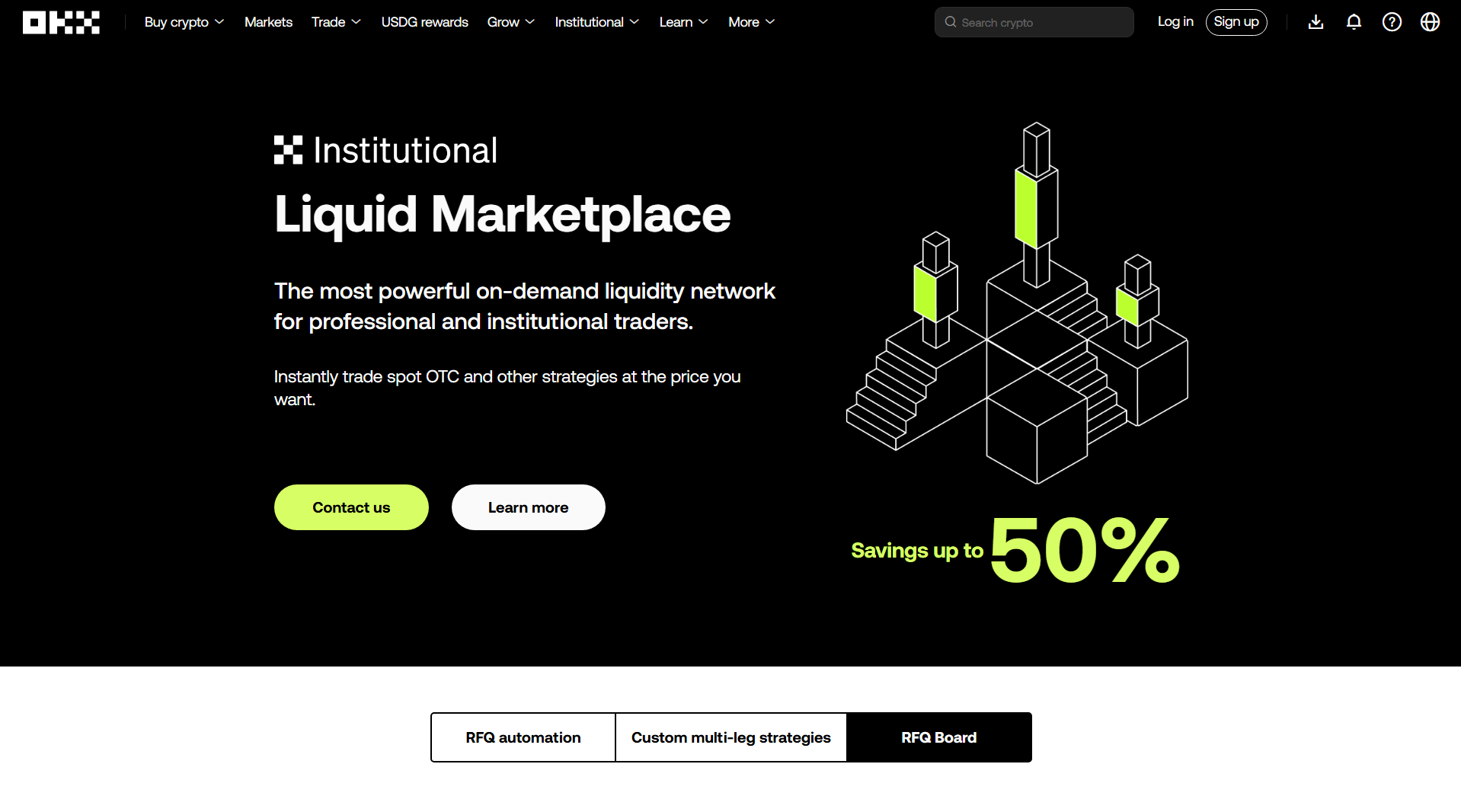
OKX OTC is best for institutional block trades that require privacy, stable pricing, and access to advanced trading products. It allows traders to execute trades through an automated Request for Quote system, locking in a fixed price before completing high-value transactions.
What sets OKX apart is its Liquid Marketplace, which connects users to a broad liquidity network across spot, futures spreads, and options. Within the OKX exchange, users can access pre-market trading, allowing traders to position into selected coins before they are listed on the main crypto exchange.
Core Features
- Automated Request for Quote system for controlled trades.
- Access to deep liquidity through OKX Liquid Marketplace
- Supports spot, futures spreads, and derivatives
- Pre-market trading for select assets
- Integrated trading platform for managing transactions

Pros and Cons
| Pros | Cons |
| Strong liquidity for block transactions | Certain advanced OTC features, are unavailable in several jurisdictions, including the USA, Canada, and UK (for retail) due to local regulations |
| Access to pre-market assets | Not suitable for small investors |
| Supports advanced derivatives strategies | May include extra fees depending on usage |
| Integrated within OKX exchange |
7. Nexo OTC: Best for White-Glove Brokerage & Asset-Backed Trading

Nexo OTC focuses on personalized execution combined with asset-backed capital flexibility. A key difference is that its brokerage-style approach is that investors and high net worth individuals receive dedicated support, making complex transactions easier to manage without relying on automated systems.
In Nexo, users can access credit lines backed by their assets, reducing the need to fully sell positions during changing market shifts. This adds flexibility to investing strategies while helping manage risk. The platform aggregates liquidity from multiple sources, supporting smooth execution across major crypto exchange pairs, all within one account and without an external broker or brokerage.
Core Features
- Access to aggregated liquidity across multiple otc platforms
- Personalized support for vip clients and large investors
- Asset-backed credit lines for flexible investing
- Supports major assets and stablecoin transactions
Pros and Cons
| Pros | Cons |
| Personalized support for large transactions | High minimum trade size (around $100,000) |
| Aggregated liquidity for smooth execution | Centralized custody increases risk |
| Suitable for high net worth individuals | Not available in all regions |
| Flexible capital use without fully selling assets |
What Is an OTC Trading Platform?
An OTC trading platform is a private system for buying and selling digital assets outside the public order book. Unlike traditional exchanges where orders are matched automatically, OTC platforms connect buyers and sellers directly, allowing large transactions to occur without affecting market prices.
Who Should Use an OTC Trading Platform?
OTC trading platforms are tailored for users who handle large volumes or require specialized trading conditions. Typical users include:
- Institutional investors: Hedge funds and family offices executing high-value crypto trades.
- High-Net-Worth individuals (HNWIs): Traders moving significant capital who want discreet execution and minimal market impact.
- Corporate treasuries: Companies converting large fiat reserves into crypto or managing corporate crypto holdings.
- VIP clients: Individuals or entities requiring personalized support, tailored pricing, and direct access to liquidity.
- Professional traders: Those implementing complex strategies like multi-leg trades, derivatives, or large-block orders.
- Financial institutions: Banks or brokers facilitating large OTC transactions on behalf of clients or internal portfolios.
OTC Trading Vs. Crypto Exchange Trading
OTC trading and crypto exchange trading differ significantly in execution, trade size, and market impact. Unlike exchange-based trading, the OTC model handles large orders directly between counterparties, often through Request-for-Quote (RFQ) systems, providing privacy and minimal market impact. It is tailored for high-net-worth individuals and VIP clients moving substantial assets, offering bespoke spreads and personalized execution.
Crypto exchange trading, on the other hand, happens on public order books of platforms like Binance, Coinbase, and OKX, where every order is visible to the market. Prices are determined by supply and demand, and large orders can cause slippage, affecting the trade price.
Exchanges are more suitable for retail and professional traders executing smaller or frequent transactions, providing instant trade execution, standardized fees, and broad asset access across multiple markets.
How Does an OTC Trading Platform Work?
An OTC trading platform connects buyers and sellers directly, bypassing public order books. Traders request a quote using a Request-for-Quote (RFQ) system to execute a trade, where assets are traded at a fixed price. Once the price is agreed upon, the trade is settled either immediately or within a short, pre-arranged window.
These platforms often aggregate assets from multiple sources, including OTC exchanges, to accommodate high-volume trades without slippage. Users benefit from personalized support, ensuring privacy and discretion for large transactions. Platforms like Binance, Coinbase, Kraken, Bybit, OKX, and Nexo integrate custody, settlement, and sometimes pre-market trading to optimize execution for high-net-worth individuals.
Benefits of OTC Trading
- Deep liquidity: Enables large trades without causing slippage or affecting market prices.
- Price certainty: Traders receive fixed quotes before execution using Request-for-Quote (RFQ).
- Privacy and discretion: Trades occur off public order books, protecting trading strategies.
- Dedicated support: Personalized service for high-net-worth individuals and VIP clients.
- Flexible settlement: Options to settle instantly or within a short agreed timeframe.
- Wide asset access: Supports crypto, stablecoins, and major fiat currencies across platforms like Binance exchange, Coinbase exchange, Kraken exchange, OKX exchange, Bybit, Crypto.com, and Nexo.
- Lower market impact: Prevents large orders from causing sudden price swings on traditional exchanges, which is the key benefit for large trades.
Risks of OTC Trading
- High minimum trades: Most OTC platforms require large transaction amounts, often $50,000 or higher, limiting access for smaller traders.
- Counterparty risk: Trades rely on the platform or desk for execution, meaning users must trust the security and risk if execution fails.
- Reduced transparency: Pricing and spreads may not always be fully visible compared to public exchanges.
- Geographic restrictions: Certain features may be unavailable in specific countries.
- Slower execution for complex trades: Multi-leg or bespoke trades may take longer than standard exchange orders.
- Centralized custody risks: Some OTC platforms hold assets in custody, so users do not control private keys, which introduces potential security exposure.
How to Choose the Right OTC Trading Platform
1. Security Standards and Regulatory Compliance
When selecting an OTC trading platform, traders should prioritize strong security measures, including institutional-grade custody, encryption, and cold storage. Platforms with clear regulatory compliance give traders and high-net-worth individuals confidence that assets are protected against fraud or manipulation. Ensure that the crypto exchange or OTC platform provides verification, KYC, and transparent risk management policies.
2. Regional Availability
Some OTC platforms restrict services in certain countries. Check whether the platform and its supported assets are accessible in your location. Availability matters for institutional clients who need seamless access to crypto exchanges and OTC services for large trades without geographic limitations.
3. Fees and Spreads
Even if a platform advertises zero trading fees, most OTC trading services incorporate costs into spreads. Compare fees and brokerage charges across platforms. Lower spreads and transparent price execution benefit investors, traders, and financial institutions handling large-volume transactions.
4. Trade Size Limits
Each OTC trading platform sets minimum trade sizes. For high-volume trades, ensure the platform supports your intended trade size. High net worth individuals, VIP clients, and large institutions often require the ability to execute trades worth hundreds of thousands or millions without market disruption.
5. Liquidity Depth
Liquidity determines how easily assets can be bought or sold without affecting the market price. Platforms with deep liquidity, including crypto exchanges with OTC services, allow large trades to settle efficiently. Check that the OTC platform can match orders across multiple venues, ensuring minimal market manipulation and better profit potential.
6. Dedicated OTC Desk
A dedicated OTC desk offers personalized support for institutional investors, traders, and high-volume clients. Features include RFQ (Request for Quote) execution, cold storage, direct negotiation, and secure settlement. This ensures discretion, faster execution, and a professional environment for managing assets, derivatives, or crypto portfolios.
Conclusion
The right OTC trading platform for you depends on your trade size, liquidity needs, and execution style. While crypto exchange platforms suit smaller trades, OTC trading supports large transactions with better price control. Platforms like Binance exchange, Coinbase exchange, OKX exchange, Kraken exchange, Bybit, Crypto.com exchange, and Nexo each serve different traders and investors. Access to professional otc services plays a key role in efficient execution.
FAQs
There’s no single best OTC trading platform. Binance exchange leads in liquidity, Coinbase exchange suits US institutions, while OKX exchange, Kraken exchange, Bybit, Crypto.com exchange, and Nexo each serve different traders and investors based on trading needs.
Most OTC platforms require between $50,000 and $100,000 per trade, though some otc trading services set higher limits depending on liquidity and assets involved.
Yes, if you use a reputable platform with strong security, proper compliance, and clear risk management. However, counterparty risk still exists since trades are handled privately.
OTC trading allows traders to execute trades privately with fixed price quotes, while exchange trading happens on public order books where price is influenced by market demand.
OTC transactions are taxed similarly to regular crypto trades. Investors may pay capital gains tax based on profit, depending on their country’s regulations.
Most OTC desks earn through spreads instead of direct trading fees, sometimes including additional fees or extra fees within the quoted price.