
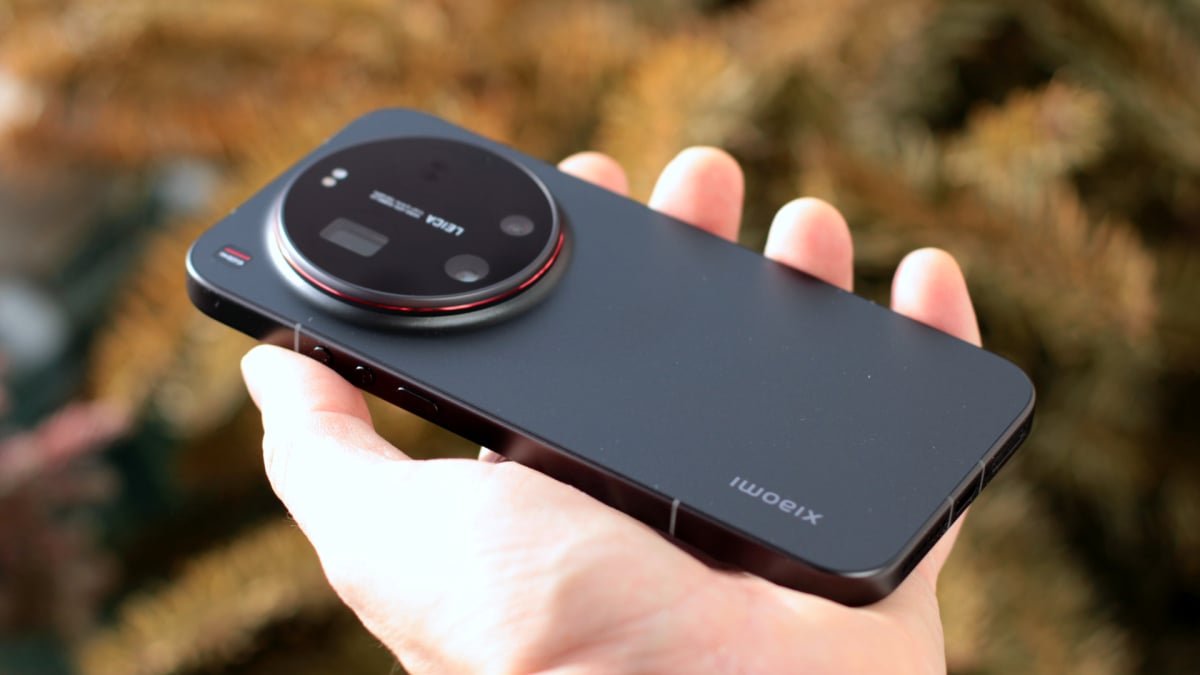
Xiaomi’s Ultra line of phones has always been about one thing: Peak camera performance. The new Xiaomi 17 Ultra, launched ahead of MWC 2026 in Barcelona, pushes the boundaries once more, though it suffers from similar setbacks as its predecessors.
Note that there was no Xiaomi 16 Ultra; the company decided to skip that number and go straight from the Xiaomi 15 and 15 Ultra to Xiaomi 17 and 17 Ultra, likely to “catch up” with Apple, whose latest models also bear the number seventeen. Despite the change, the new Xiaomi phones are very much an evolution of last year’s flagship models.
On the phone side of things, the Xiaomi 17 Ultra is an extremely capable Android smartphone, with a 6.9-inch, 120Hz OLED display, a Snapdragon 8 Elite Gen 5 chip, 16GB of RAM, 512/1024GB of storage, and a 6,000mAh battery with 90W fast charging and 50W wireless charging. It comes in three colors: Black, White, and the sparkly Starlit Green (Xiaomi sent me a black unit, but the Starlit Green looks way cooler).

The 6.9-inch OLED display is excellent.
Credit: Stan Schroeder/Mashable
Where the Xiaomi 17 Ultra differs from the regular Xiaomi 17, which also debuted here in Barcelona, is mainly in screen size (6.9 vs. 6.3 inches), and the camera. The Ultra’s got a massive, Leica-branded camera array on the back, with a 50-megapixel main camera, a 200-megapixel telephoto camera, and a 50-megapixel ultra-wide camera, coupled with a 50-megapixel selfie camera on the front.
Mashable Light Speed

At 8.29mm thickness and 218 grams of weight, it’s the thinnest and lightest Xiaomi Ultra phone ever.
Credit: Stan Schroeder/Mashable
The 200-megapixel, 75-100mm telephoto camera gives this phone otherworldly zoom capabilities, with up to 17.2x of “optical-level zoom.” I’ve tried it out, and was able to take usable photos at 100x zoom or more, far beyond in the distance than what my naked I could see.

Left:
This is what the XIaomi 17 Ultra’s telephoto camera can do.
Credit: Stan Schroeder/Mashable
Right:
Credit: Stan Schroeder/Mashable
Venture that far out, and AI takes the reins quite heavy handedly, which you’ll see in the way the system recreates the letters of a sign you took in the distance. Still, if you like the idea of having a camera that can take sharp photos of a flower that’s a hundred yards away, this is the phone to do it with.

Left:
Credit: Stan Schroeder/Mashable
Right:
The zoom on this phone is so good, it’s worth providing another example. It’s like having a set of binoculars.
Credit: Stan Schroeder/Mashable
To add an exclamation point to the phone’s camera capabilities, Xiaomi also sells two optional photography kits which consists of two different cases that turn the phone into something that really looks like a compact camera, and add a few buttons, visual details, and battery life to the mix. The smaller Xiaomi 17 Ultra Photography Kit makes more sense to me as the phone still retains somewhat normal dimensions; the two-part Xiaomi 17 Ultra Photography Kit Pro makes it a bit too big for my taste.

The photography kits look cool, but they make the phone a lot bulkier.
Credit: Stan Schroeder/Mashable
The kits, as cool as they may be, illustrate the most obvious drawback of this phone: it’s too much of a camera. It’s top heavy, has a smaller battery than the regular Xiaomi 17, and – due to its massive camera bump on the back – doesn’t support Xiaomi’s wireless, magnetic battery. Don’t get me wrong, this is one powerful phone, but it’s primarily aimed at photography enthusiasts. Kudos to Xiaomi for making the Ultra lighter than ever, though at 218 grams it’s still not exactly lightweight.
Topics
Mobile World Congress
Xiaomi